Domaine Lucas Berthuit - Petit Coteau 2024
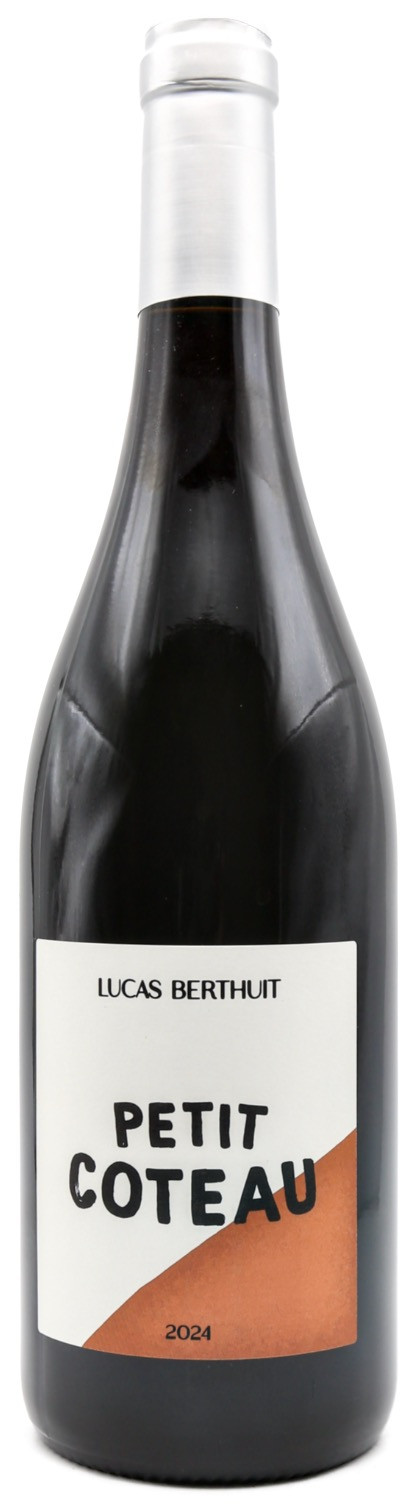
In Pépieux, in the Aude region, Lucas Berthuit works with a Languedoc of light, wind, and peasant memory. Established since 2023, he cultivates a vineyard of about six hectares in organic farming, between the Aude valley and the foothills of the Montagne Noire. The Mediterranean climate remains marked by heat, but the Cers, this precious cold wind in the region, helps preserve the sanitary condition of the grapes and an essential part of freshness. The soils of the estate, mostly clay-limestone, vary according to the areas between red clays, white clays, and gravel, giving the wines a nuanced expression rather than a simple sunny profile. Lucas Berthuit's work is part of a search for free, precise, and accessible wines, with manual harvesting, respected grapes, and measured cellar intervention. Petit Coteau 2024 perfectly reflects this approach: a Vin de France red that is both generous, fine, and sincere, rooted in the Félines area. It is a bottle of fruit and texture, but also a wine of place, seeking to express the South with suppleness, brightness, and naturalness.
This cuvée blends 75% cinsault and 25% centenary black carignan, grown on the clays of the Félines area. The cinsault gives the wine its supple touch, delicate red fruit, drinkability, and this sensation of a light southern red, far from any heavy extraction. The black carignan, from old vines, provides a deeper base, a slightly darker framework, and an earthy dimension that prevents the wine from remaining only in the immediate fruit register. The vines are grown in goblet style, on plots converting to organic farming, in a coherent logic with the entire estate. The grapes are hand-harvested in crates, then vinified with a short maceration to preserve aromatic freshness and the finesse of the grain. Aging in tanks allows keeping the natural volume of the wine without locking it into a woody mark. With its 13.5%, Petit Coteau 2024 maintains a true presence, but its balance relies more on fluidity, fruit, and energy than on power.
The color presents as a bright red, of moderate intensity, with violet reflections that announce a young, lively, and expressive wine. The nose evokes fresh cherry, ripe strawberry, raspberry, then slides towards more discreet notes of sweet pepper, garrigue, and warm earth. On the palate, the attack is supple, immediately carried by a frank fruit and delicately fleshy matter. The cinsault brings a silky, almost airy sensation, while the carignan gives relief, a slight grip, and a more structured finish. The whole remains very digestible, with pleasant freshness and fine tannins that extend the wine without hardening it. This red will pair very well with grilled poultry, herb lamb chops, country terrine, roasted vegetables, artisanal pizza, candied eggplants, or a slightly aged goat cheese. Served around 14 to 15°C, it will keep its fruit brightness while revealing the discreet depth of its old carignan vines.
Grape varieties: 75% cinsault, 25% black carignan