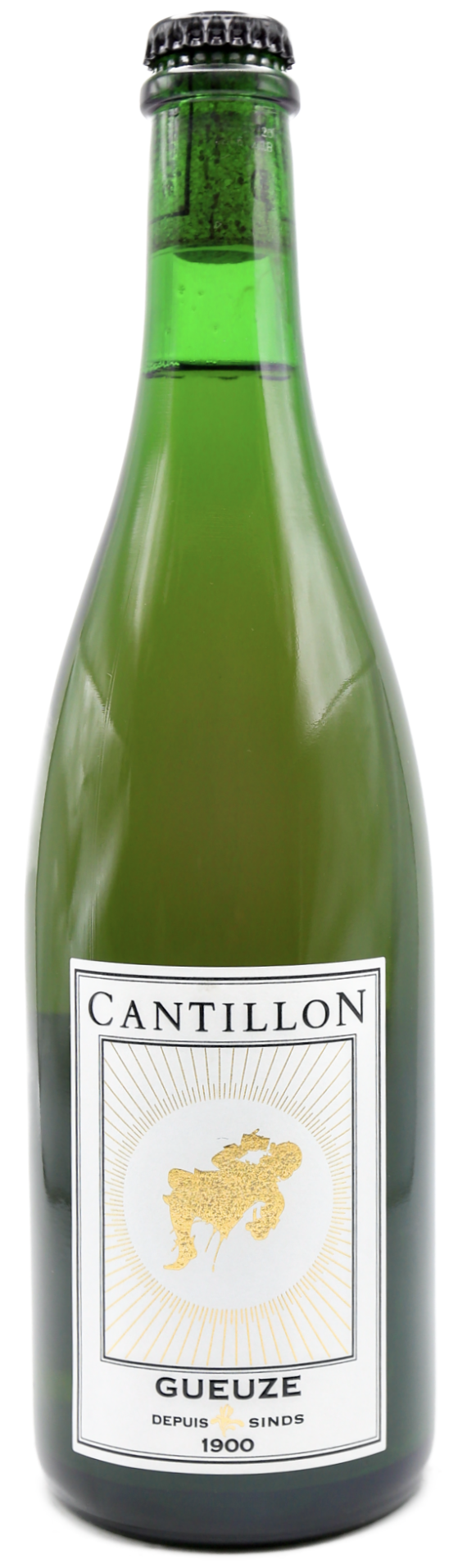
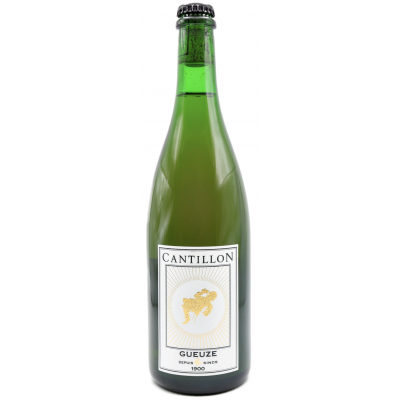
Cantillon Brewery - 100% Organic Lambic Gueuze 2026 - 5.5%
Founded in 1900 in Anderlecht, in the heart of Brussels, Cantillon Brewery is one of the last great guardians of the lambic tradition, this spontaneously fermented Belgian beer whose history dates back several centuries. Still family-owned and independent, it is today run by Jean Van Roy, representing the fourth generation of brewers. Unlike conventional breweries, Cantillon perpetuates an ancestral manufacturing method, in which the yeasts and bacteria naturally present in the environment participate in the fermentation of the wort. This approach, combined with prolonged aging in oak barrels, gives rise to beers of exceptional complexity, where acidity, fruity aromas, and wild nuances compose an immediately recognizable signature. Gueuze is the most emblematic expression of this know-how: a meticulous blend of lambics of different ages, whose complementarity allows for a sparkling, dry, and particularly refined beer. Committed for many years to the use of raw materials from organic farming, Cantillon defends an artisanal production that favors authenticity, patience, and the natural diversity of fermentations. Highly sought after by lovers of aged beers, its 100% Lambic Gueuze has a unique personality, halfway between the Brussels brewing tradition and the world of great terroir wines.
The Cantillon Gueuze 2026 is made from a blend of lambics of different ages, generally between one and three years, aged in oak barrels in the brewery's cellars. The production begins with a traditional mash combining malted barley and raw wheat, complemented by aged hops, used mainly for their preservative properties rather than for aromatic bitterness. After boiling, the wort is transferred to a large copper cooling vat, where it cools naturally overnight in contact with the ambient air. It is at this stage that the microorganisms present in the brewery environment spontaneously inoculate the wort, triggering a complex fermentation that will continue slowly in oak barrels. The young lambics, still rich in fermentable sugars, provide the energy necessary for the second fermentation in the bottle, while the older lambics contribute to the aromatic depth, finesse, and balance of the blend. The brewmaster tastes the different barrels before selecting the most complementary lots, each blend giving rise to a slightly different expression. The 2026 bottling, carried out notably on February 11, is followed by natural refermentation and horizontal maturation in the cellar, allowing the effervescence to develop gradually. No carbon dioxide is added: the bubbles result exclusively from the activity of the yeasts present in the beer. This traditional method gives rise to a lively and evolving Gueuze, capable of transforming over several decades under good storage conditions.
The Cantillon Gueuze 2026 reveals a bright golden robe, sometimes slightly hazy, animated by lively effervescence and delicate white foam. Its complex bouquet combines aromas of green apple, fresh lemon, and grapefruit zest with nuances of dry hay, old wood, and cereals. Upon aeration, characteristic notes of spontaneous fermentation appear, evoking fine leather, fresh cellar, and subtle rustic touches, without ever masking the precision of the fruit. On the palate, the attack is particularly lively, carried by a frank and refreshing acidity that constitutes one of the great signatures of the Cantillon style. Flavors of citrus, tart apple, and white-fleshed fruits extend over a light but remarkably complex body, supported by natural effervescence that brings relief and energy. The texture retains a certain suppleness, while woody nuances and fermentation notes contribute to the overall depth. The finish, very dry and persistent, is distinguished by a salivating acidity, fine bitterness, and a delicately mineral impression. Already expressive in its youth, this Gueuze has exceptional aging potential: over the years, its acidity can soften and its bouquet develop nuances of dried fruits, discreet honey, undergrowth, and leather. Served around 15 °C in a sufficiently large glass, it will ideally accompany oysters, aged goat cheeses, old Comté, roasted poultry, mariner's mussels, or slightly vinegary preparations, highlighting their freshness and complexity.